
Authors: Ayesha Manzoor, Suleman Gohar, Saqib Naveed, Sairah Syed
Affiliation: Barani Agricultural Research Institute, Chakwal
Email: [email protected]
Author Highlight:
Ayesha Manzoor has been working as a Scientific Officer at the Barani Agricultural Research Institute, Chakwal, since 2017. She standardized the production technology of different vegetables for rainfed areas and developed two varieties (peas and chillies), particularly for the Pothwar region.
Introduction: Why Pesticides Matter
Pesticides are essential to modern agriculture because they help maintain high agricultural output. However, pesticide residues in food are a significant concern for human health.
What are pesticide residues?
Pesticide residue refers to the pesticides that may remain on or in food after they are applied to crops. Many countries regulate maximum allowable residue levels in food to ensure safety.
Farmers sometimes apply pesticides too close to harvest due to lack of information, contaminating fruits, vegetables, and other by-products before they reach the market.
Dirty Dozen: Fruits and Vegetables with the Highest Pesticide Residues
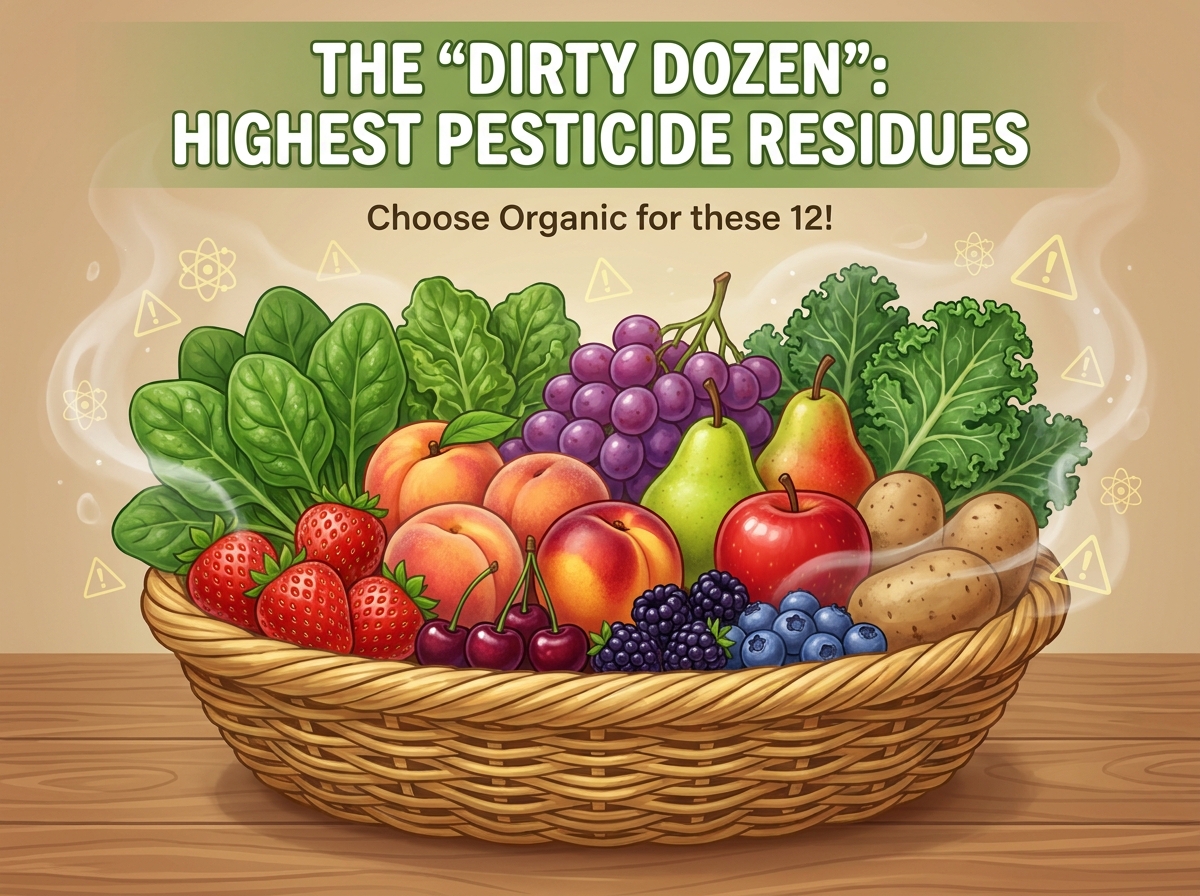
The Environmental Working Group (EWG) publishes an annual list of conventionally grown fruits and vegetables with the highest pesticide residues. Based on the latest analysis, the top 12 crops are:
- Spinach
- Strawberries
- Kale, collard, and mustard greens
- Grapes
- Peaches
- Cherries
- Nectarines
- Pears
- Apples
- Blackberries
- Blueberries
- Potatoes
EWG reports that most samples contain multiple pesticides, even after washing.
Why These Crops Have High Pesticide Residues
- Thin or delicate skin: Fruits like strawberries, peaches, grapes, and berries allow pesticide penetration and cannot be peeled.
- Physical fragility: Bruising or cracking leads to decay, increasing preventive pesticide use.
- High disease pressure: Leafy greens and berries are prone to insect and fungal diseases due to dense canopies and humid microclimates.
- Repeated pesticide applications: Crops like grapes, stone fruits, spinach, and potatoes require frequent sprays to prevent significant yield losses.
- Soil and water contamination: Spinach, leafy greens, strawberries, and potatoes are more exposed to soil-borne organisms and splash contamination.
How to Reduce Pesticide Residues on Produce
There are safe and effective ways to reduce pesticides in fruits and vegetables:
- Scrub in cold water: Rinse produce while scrubbing with a soft brush.
- Baking soda water: A 1% baking soda solution is more effective than tap water for removing residues.
- Peel fruits and vegetables: Removing the skin significantly reduces dietary pesticide intake.
- Blanching: Boiling then cooling reduces residues by over 50% in most vegetables and fruits (except peaches).
- Boiling: Boiling strawberries can reduce pesticide residues by 42.8–92.9%.
- Choose organic: Organically grown fruits and vegetables are the safest alternative to contaminated produce.
Conclusion
High pesticide use in agriculture has made certain fruits and vegetables more likely to carry residues. Being aware of the Dirty Dozen, proper washing methods, peeling, and choosing organic options can significantly reduce pesticide exposure and protect health.